Lead UX Research · Case Study · 06
PILR Training
Researching what makes funders say yes, so a grassroots program for under-resourced student-athletes can grow.
Researching what makes funders say yes, so a grassroots program for under-resourced student-athletes can grow.
Overview
PILR Training is a rising social enterprise that empowers athletic coaches and student-athletes to become change agents, promoting mental and physical well-being in their communities through sport.
Achieving that mission depends on fundraising and gaining support from local leaders and potential investors. PILR set out to revamp its website so it could captivate donors and attract future coaches.
Our research team's job: figure out what actually moves funders, so the new site could communicate PILR's vision, build trust, and inspire support.
The Challenge
As an early-stage, local nonprofit, PILR's growth hinges on grants and donors, but the team didn't yet have a clear picture of who those funders are, how they decide, and what makes them trust a small organization.
Without that, the website risked talking about PILR instead of speaking to what funders look for.
My Role
As a Lead UX Researcher I owned the large-scale moving pieces: I wrote the interview questions, scheduled every interview, personally conducted three of them, and built the funder personas that anchored our synthesis.
What I led & contributed to
open-ended interview questions I authored, with follow-ups
funder interviews I personally conducted
foundations analyzed in secondary research
funder personas I created, Sarah & Sofia
Research objectives
What motivates donors to support organizations like PILR.
The key factors that influence donation decisions.
Donor expectations for a nonprofit website and what information they find most compelling.
How to validate content, structure, and design concepts for the new site.
How to ensure the website communicates PILR's mission to a diverse audience.
The Approach
I drafted the interview guide with the team, recruited and scheduled participants, and ran in-depth interviews with donors & investors, paired with secondary research on foundations.
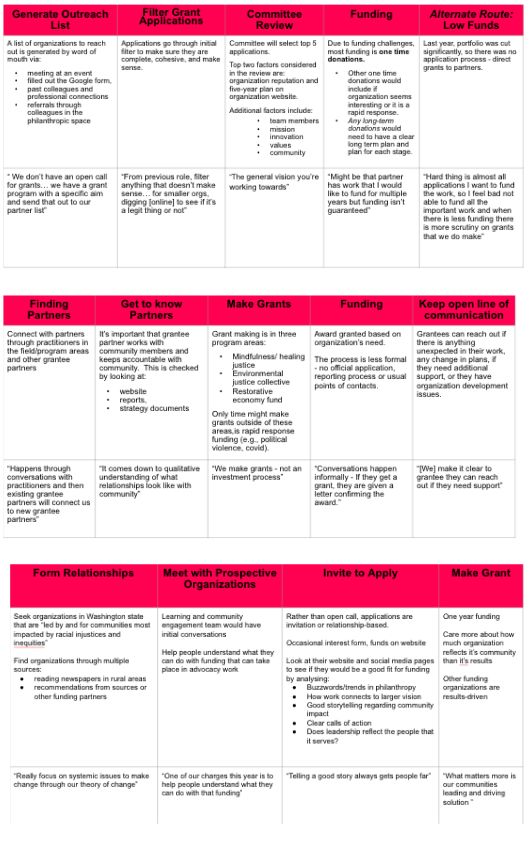
Synthesized interview notes and debrief docs into a map of how funders move from discovery to a funding decision.
Translated the patterns into two funder personas, Sarah (foundations) and Sofia (grant givers), to keep the team grounded in real motivations.
Mapped funders' jobs, pains, and gains against the value PILR can offer, a shared reference for design and writing.
Exploratory research · In-depth interviews
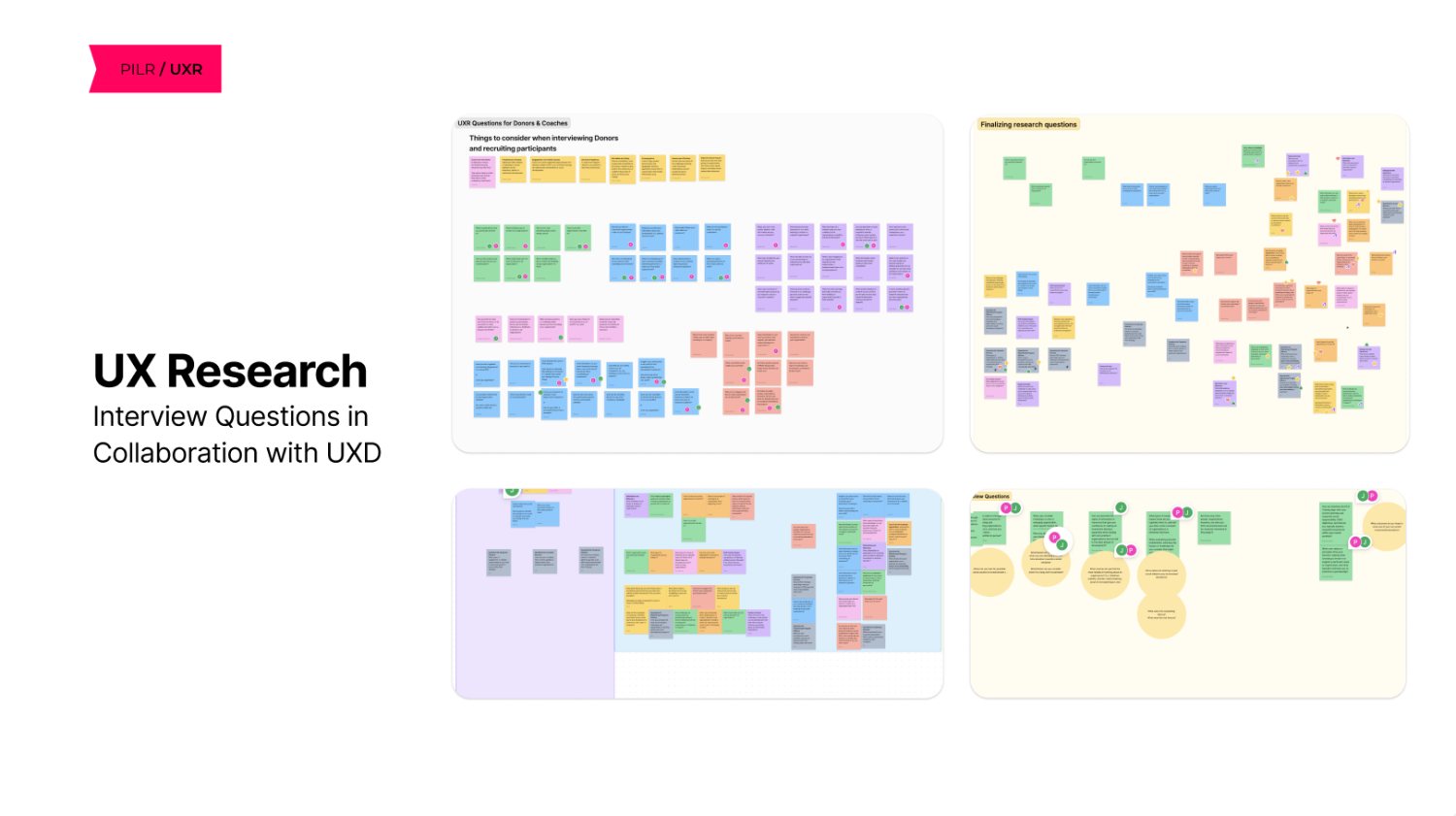
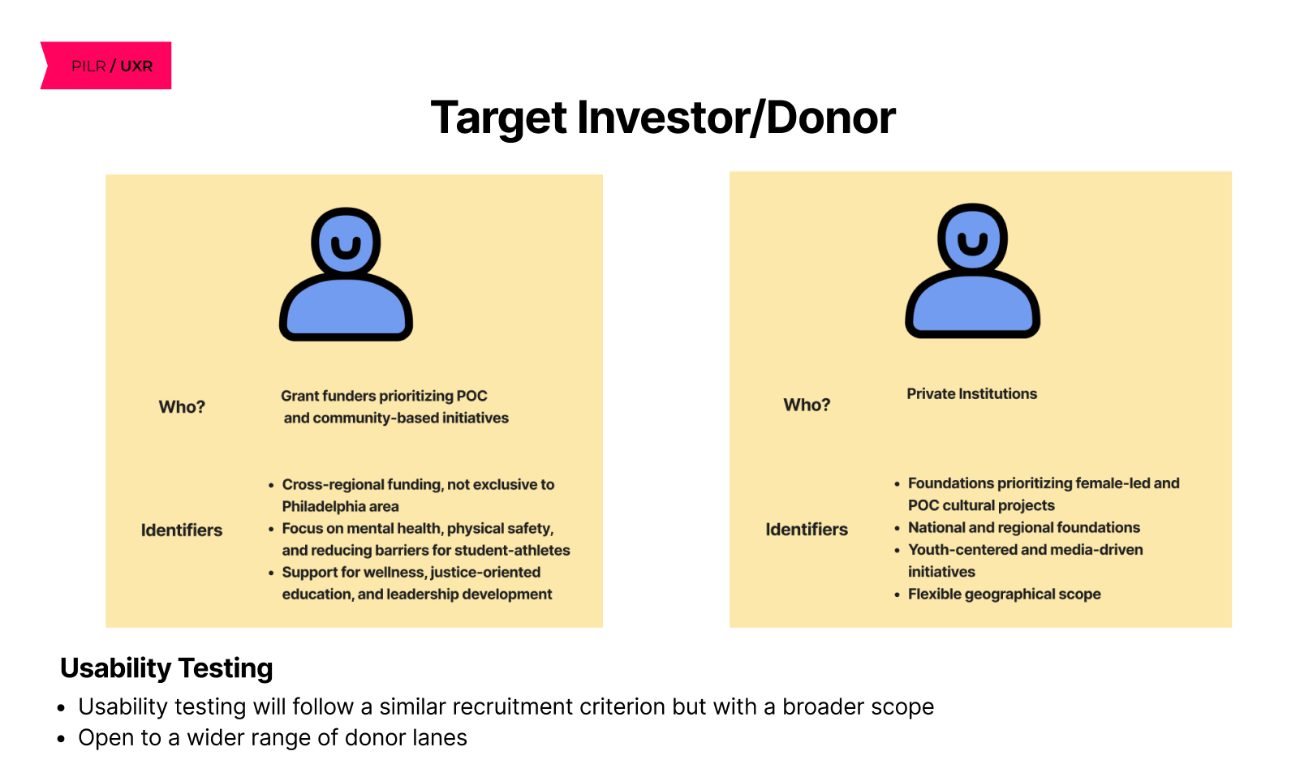
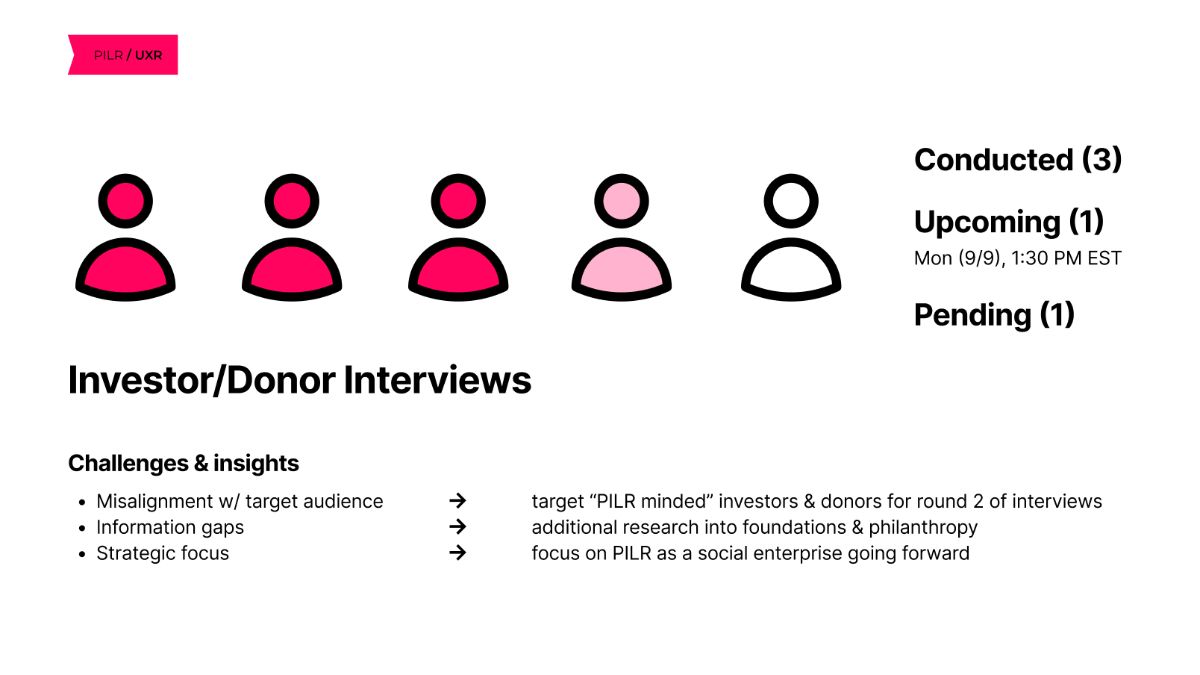
We started with a brainstorming session alongside the UX Design team to shape the best possible questions for donors. I led that effort, finalizing a guide of five open-ended questions with follow-ups and recruiting our pool of “PILR-minded” investors and donors.
Outcome: 5 core questions · 3 of 5 interviews conducted by me.
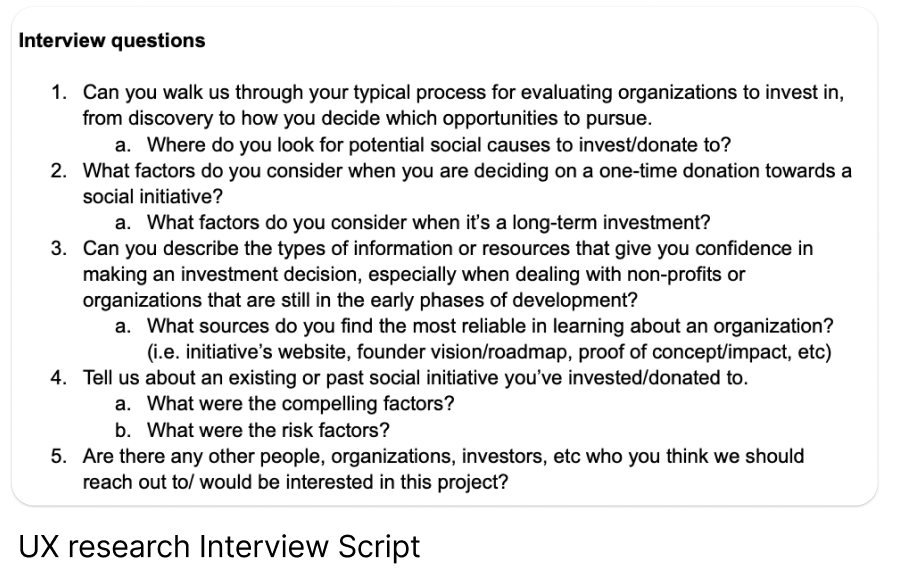
The interview guide I wrote
Walk us through your process for evaluating organizations to invest in, from discovery to deciding which to pursue.
What factors do you consider for a one-time donation toward a social initiative?
What factors do you consider when it's a long-term investment?
What information or resources give you confidence, especially with early-stage organizations?
Tell us about a social enterprise you've invested in or donated to.
Challenges & insights
The first round of interviews surfaced a mismatch between the interests of potential investors and donors which made it hard to draw meaningful conclusions about how funders decide.
In response, we narrowed our focus to “PILR-minded” investors and donors people genuinely aligned with PILR's mission, which produced far more productive, relevant conversations.
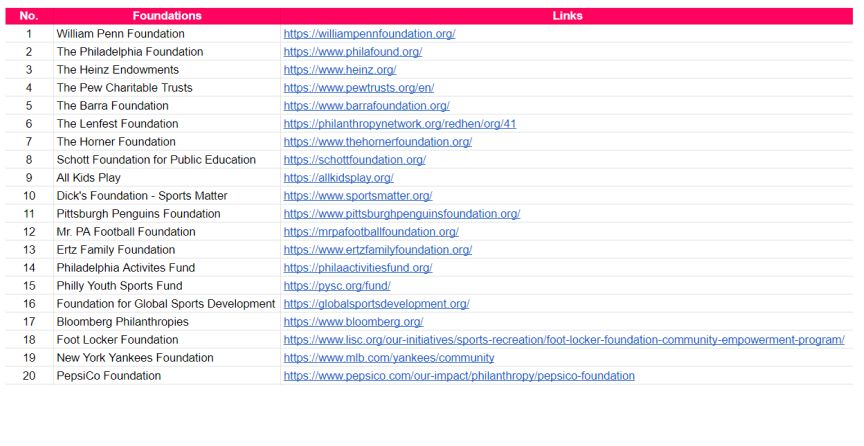
Interviews alone couldn't tell the whole story, so I led additional secondary research into foundations and philanthropic organizations to bridge the gap and deepen our understanding of funding opportunities.
We studied 20 foundations, funding priorities, application requirements, grant sizes, past recipients, reporting expectations, and grant cycles.
Donor landscape
As an early-stage enterprise, PILR needed to understand the shifting philanthropic landscape to align with how funders give today. Individuals still give the most, but foundations have grown from 6% of giving in 1983 to 19% in 2023.
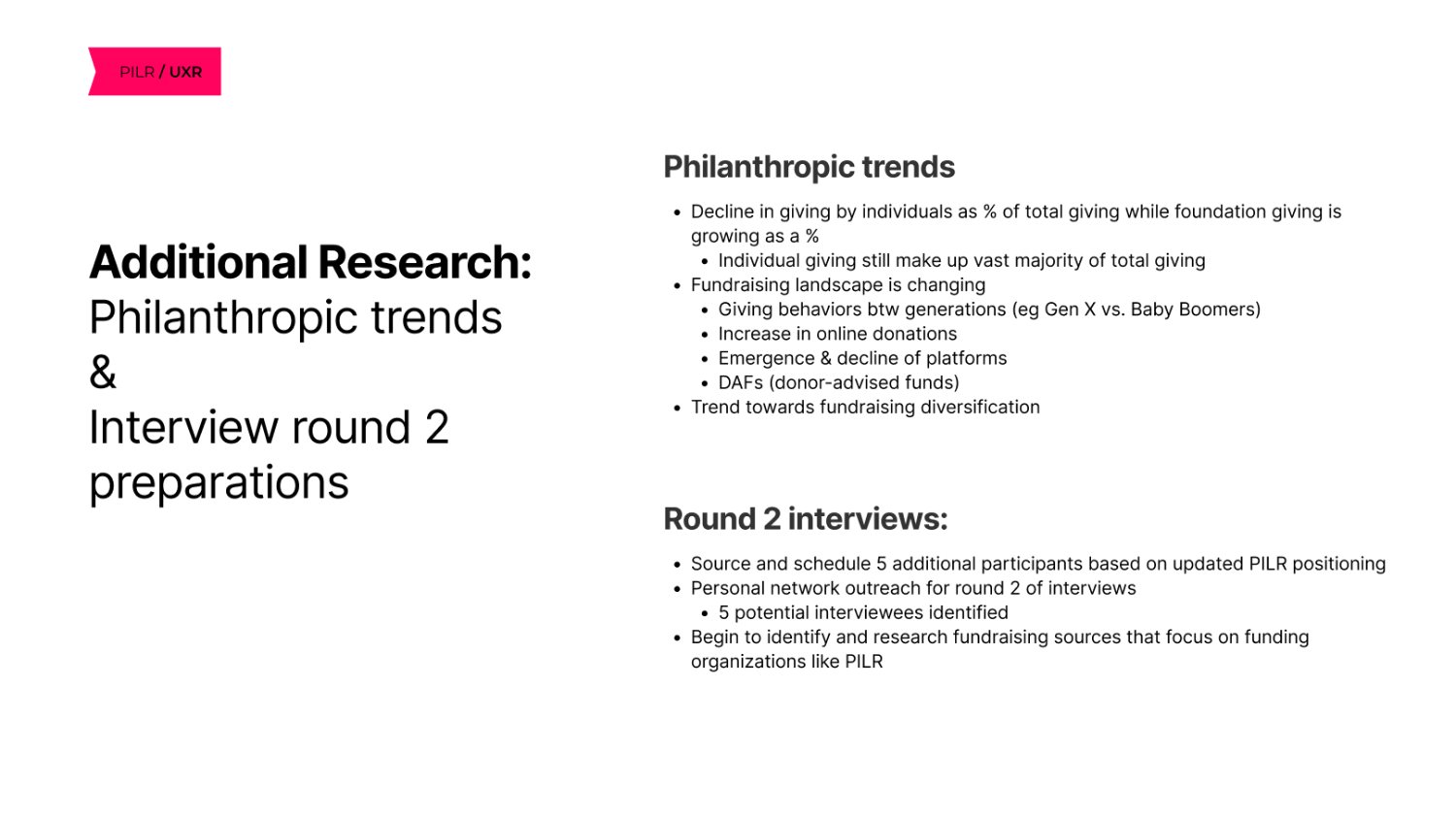
Charitable giving is projected to grow, with a clear trend toward diversified fundraising strategies.
Boomers give 40%+ via traditional methods; Gen X is fastest-growing; Millennials & Gen Z favor cause-driven, social giving.
Donor-advised funds are increasingly popular, a channel PILR can plan for.
Synthesis · Funding-process experience map
The throughline
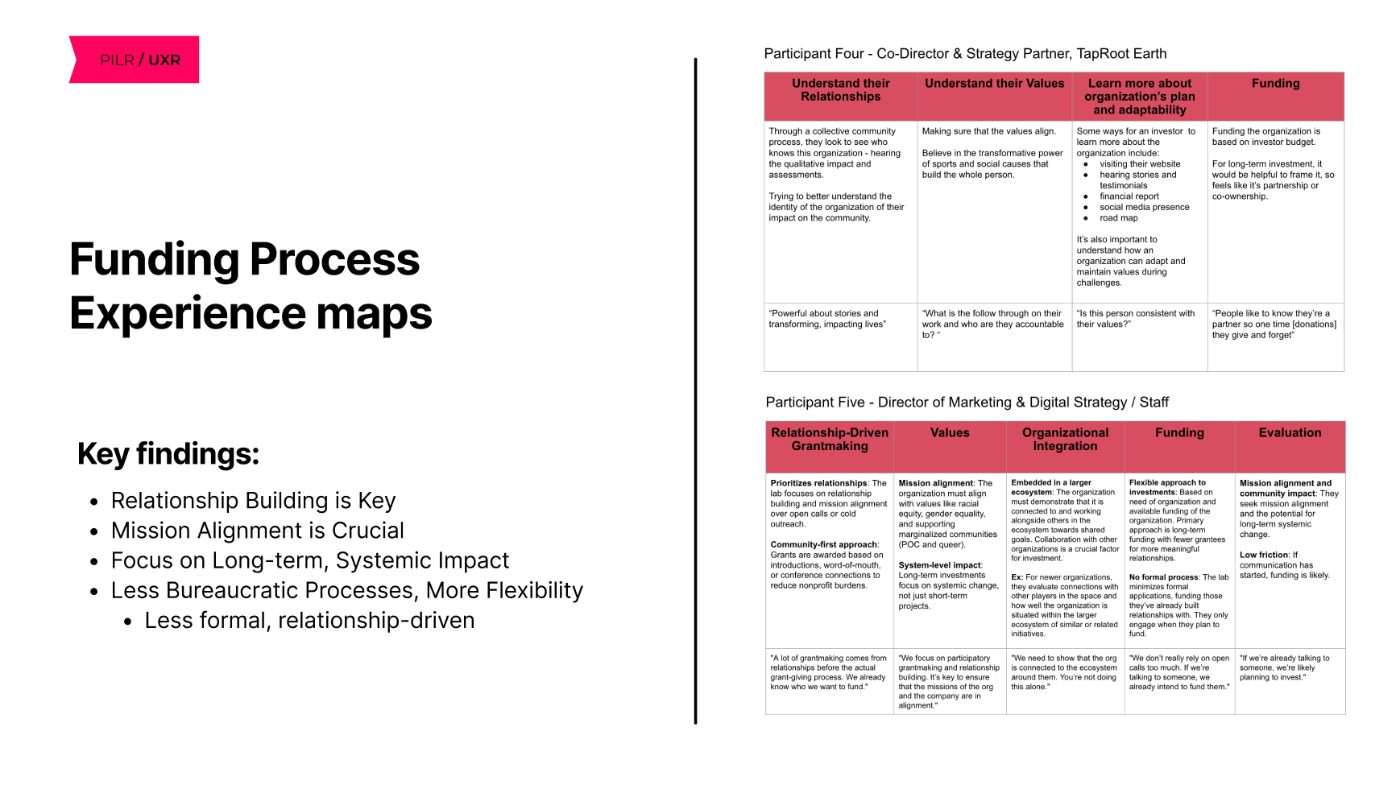
Grant givers prefer to start by building a relationship, reviewing an organization's values, mission, and team to be sure they align before any money moves.
Strong, trust-based relationships between the organization and its donors are critical.
For nonprofits, every activity, partnership, and decision must clearly align with the core mission.
Rather than quick wins, grant givers prioritize projects that lead to lasting solutions and systemic shifts.
Grant givers respond better to changing needs, emerging challenges, and new opportunities.
Funders value personal relationships, open communication, and trust over rigid protocols, fostering quicker decisions.
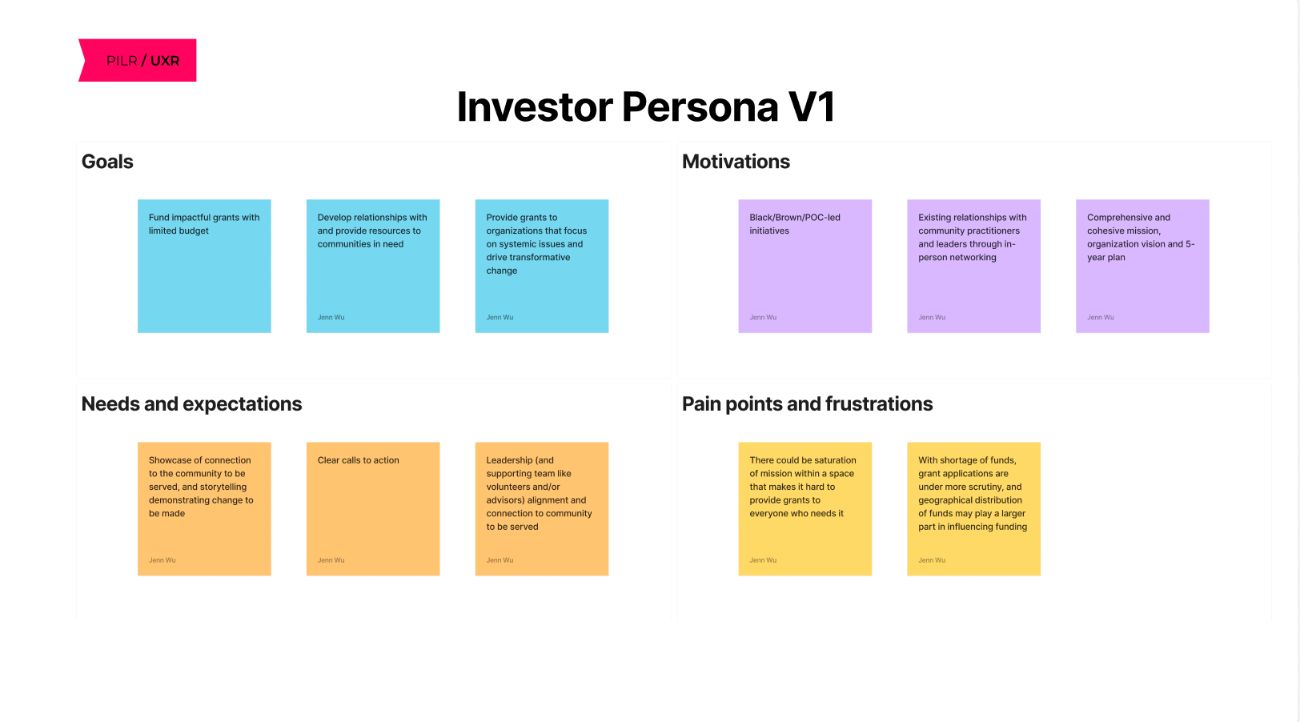
Synthesis · Personas I built
Sarah
Foundation Director · 30s–40s · NW US
“Our grant-making has to align with the foundation's mission.”
Bio
Ensures the foundation's grant-making aligns with its mission. Focus areas: health, education, social justice, and the environment.
Goals
Fund innovative solutions for long-term systemic change, financial sustainability, and organizations that can weather crises.
Motivations
Uplift underrepresented groups, respond to urgent issues with timely funding, and build sustainable, resilient organizations.
Pain points
Vague goals or budgets, and uncertainty about how funds will be used or how progress will be reported.
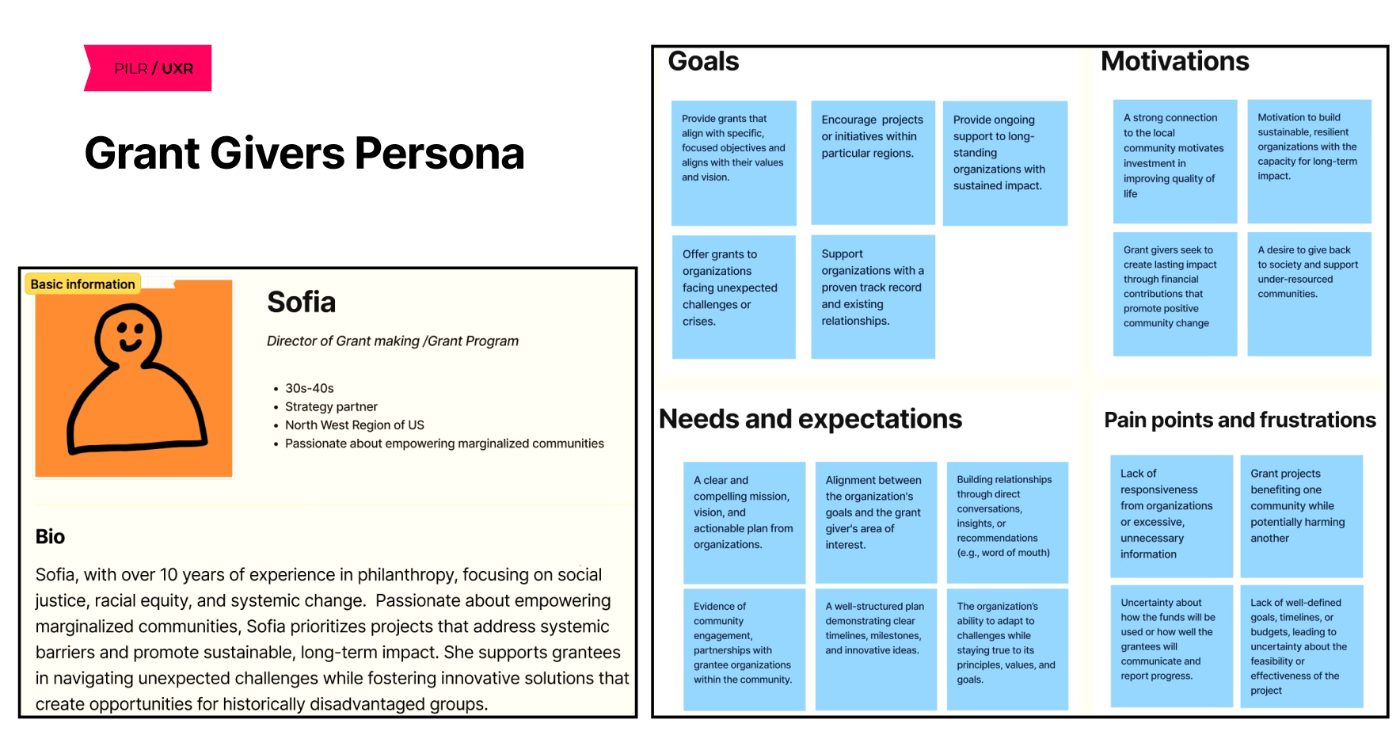
Sofia
Grant Strategy Partner · 30s–40s · Philadelphia
“A lot of grant-making comes from relationships before the actual grant.”
Bio
Strategy partner of a grant program, passionate about empowering marginalized communities in the Philadelphia region.
Goals
Fund organizations aligned with her values and region, with a proven track record and existing relationships.
Motivations
A strong connection to the local community, building resilient organizations, and giving back through lasting impact.
Needs & expectations
A clear, compelling mission and actionable plan; evidence of community engagement; relationships built through direct conversation.
Synthesis · Value proposition canvas
To make the research actionable, I mapped funders' jobs, pains, and gains against the value PILR can create, a shared reference the whole team could design and write toward.
Jobs
Evaluate social-impact projects, assess financial sustainability, and build trust in leadership and outcomes.
Pains
Difficulty finding the right organizations, establishing trust amid limited transparency, and legal or financial risk concerns.
Gains
Real social impact, alignment with their values, maximized returns with minimal risk, and reputation through credible partnerships.
Gain creators
Focus on cultural, structural, and incremental change; transparency and recognition; and networking & partnership opportunities.
Pain relievers
Roadmaps, financial reports, and impact metrics that address transparency and trust, backed by testimonials and success stories.
Products & services
A web platform, training & workshops for athletes and coaches, and a localized membership network.
Delivery · Handoff
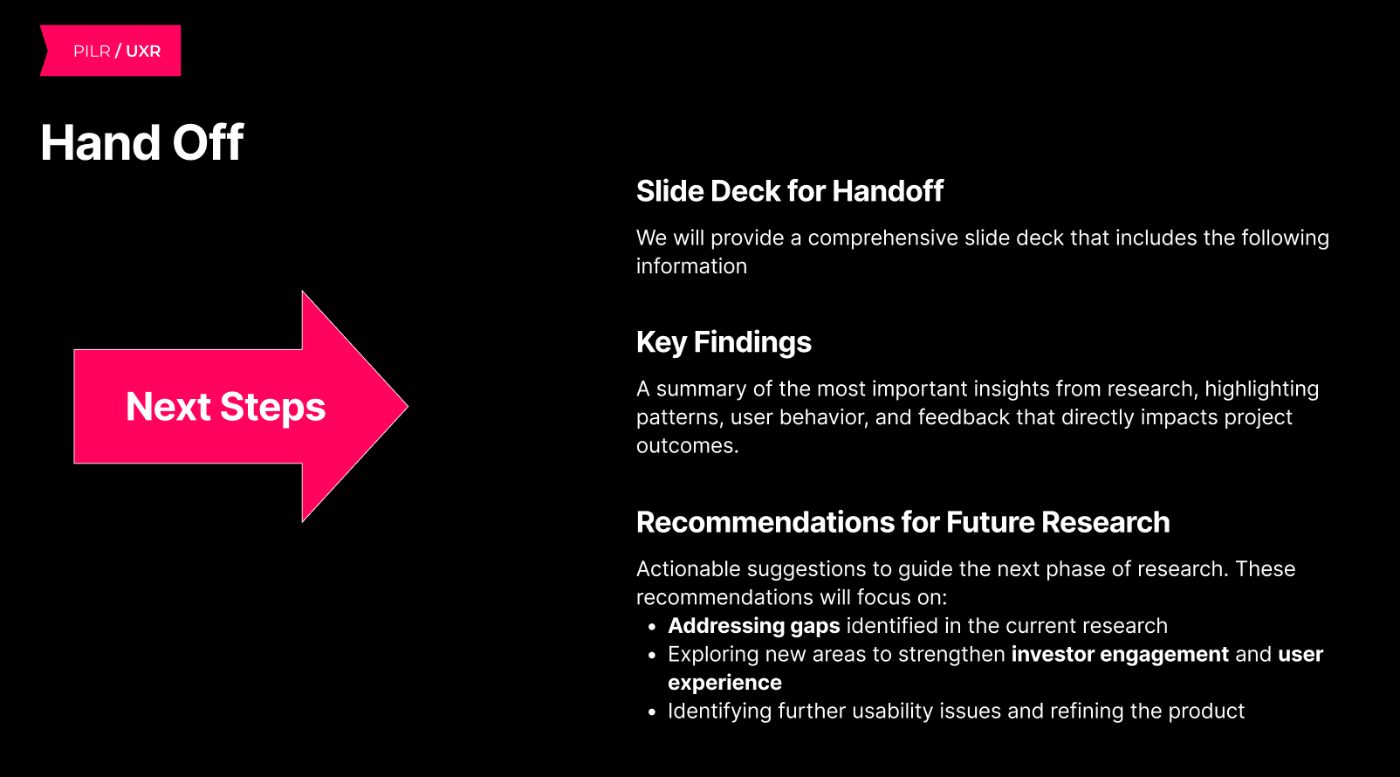
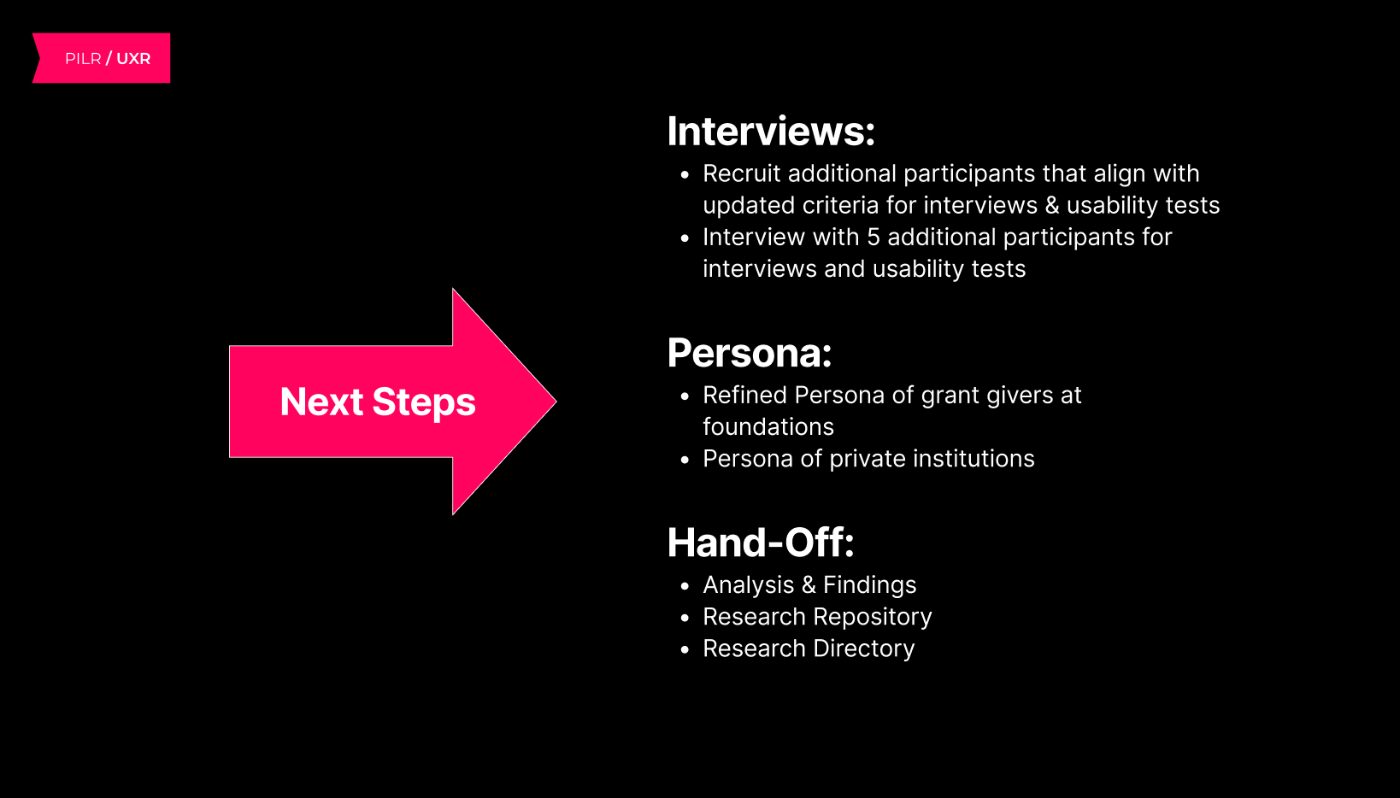
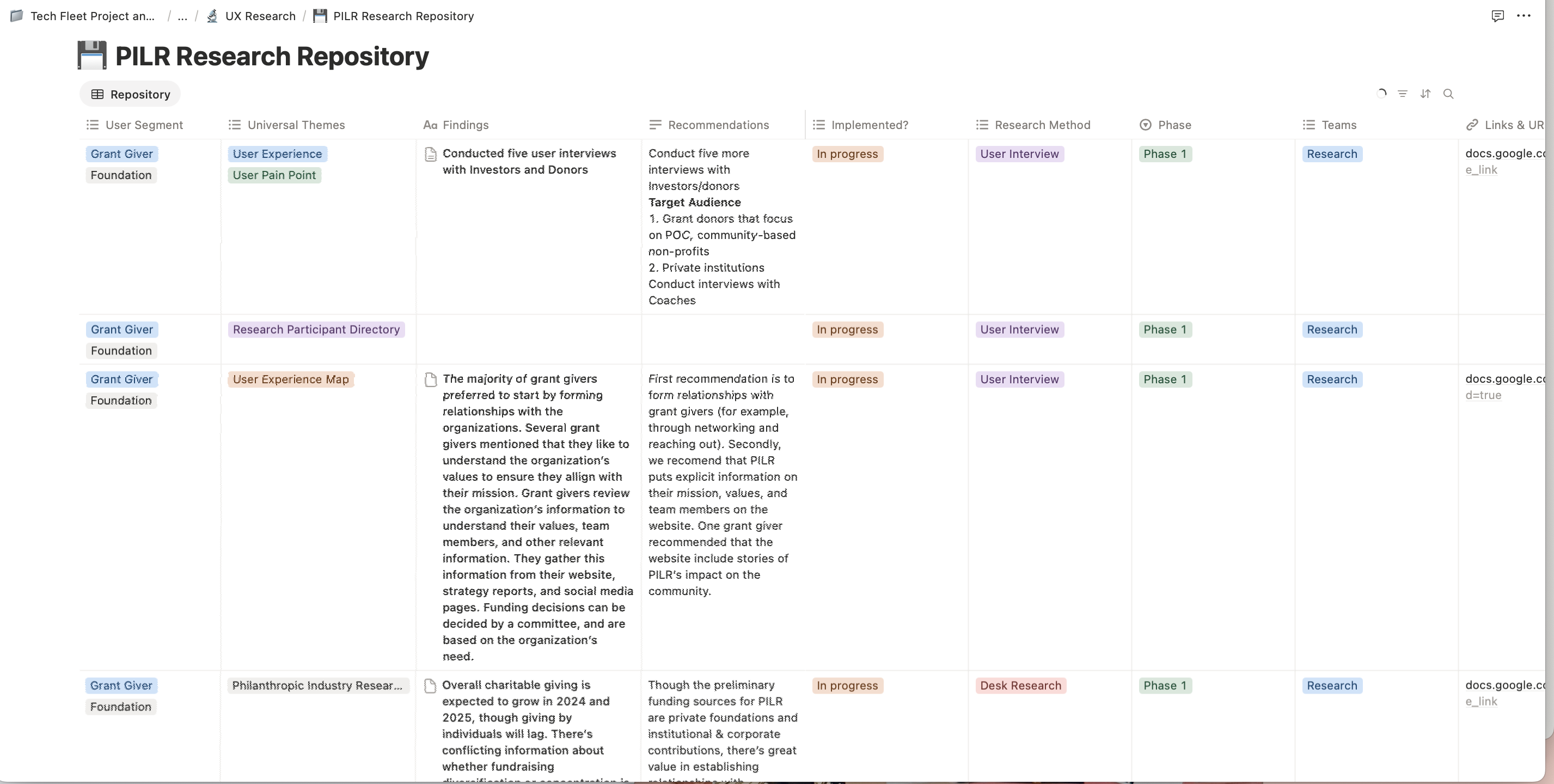
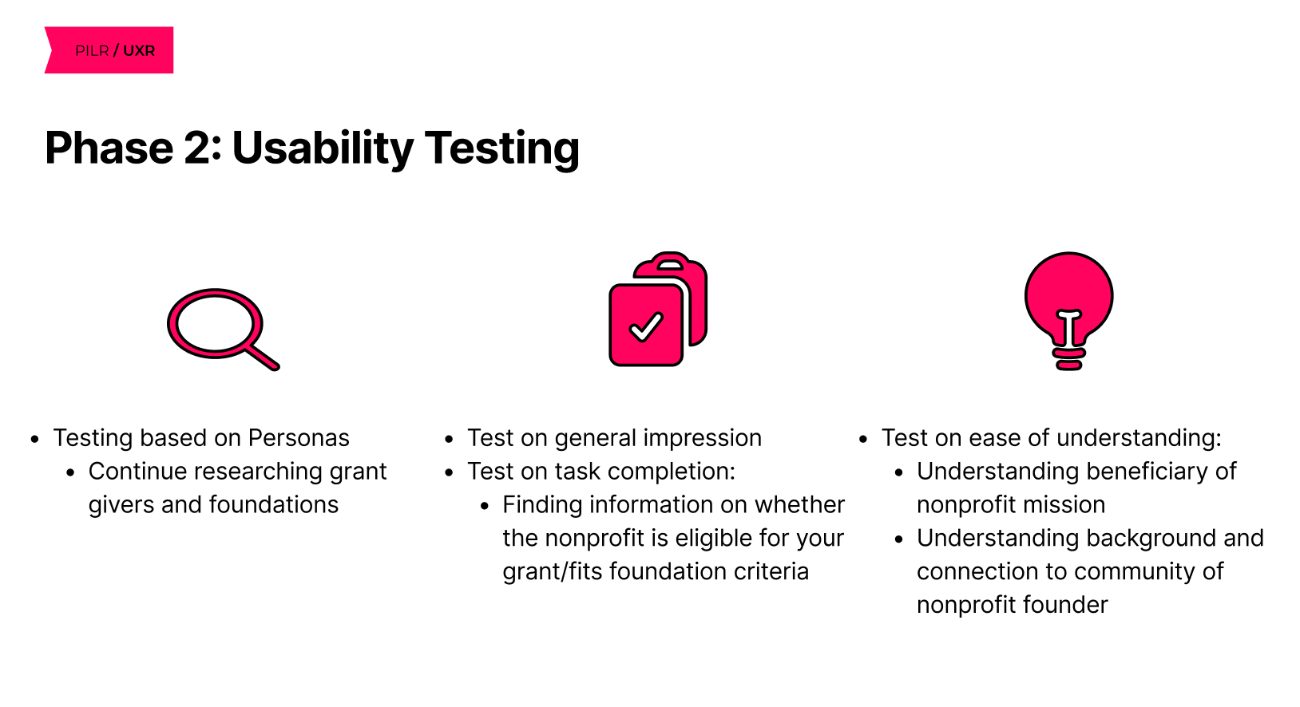
Beyond the findings, I built the infrastructure: a searchable research repository so insights outlive the sprint, and a usability-testing plan for the next phase.
Delivery · Recommendations
I translated the research into clear direction for the design, writing, and product teams, focused on earning funder trust from the first visit.
Make PILR's mission, values, and leadership clear and prominent, the first thing a funder vets.
Use case studies, testimonials, and impact metrics to prove real, sustainable community change.
Surface financial transparency, partnerships, and sponsors to ease legal and financial concerns up front.
Create clear paths to connect, partnership options, contact methods, and a flexible donation page.
Reflection
Designing for end users is only half the story. For a nonprofit, understanding funders is just as critical to whether the mission survives, and it's a research problem in its own right.
When the first interviews misaligned, narrowing to “PILR-minded” funders and adding secondary research kept the study honest. Limited access to donors taught me to build flexibility into the plan.
Turning interviews into personas and a value proposition canvas gave design and writing something concrete to build from. As a lead, that translation was my highest-leverage work.
Next steps for the team
More interviews with grant providers to deepen understanding of early-stage support.
Interview coaches to capture what drives volunteer engagement and retention.
Validate the redesign with iterative feedback in the next phase.